Tag: Power Platform
-
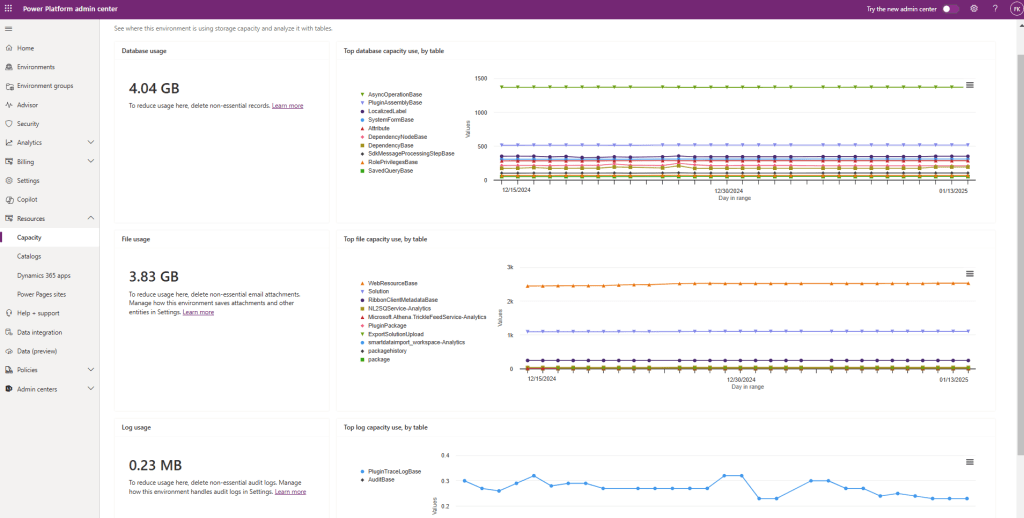
Dynamics 365 – How to Reduce Used Capacity
To maintain optimal performance in Dynamics 365, regularly monitor environment capacity and identify resource-consuming tables and components. Best practices include capacity usage monitoring, log cleanup, data archiving, proper audit history configuration, and removal of unused web resources, plugins, and solutions. These actions prevent resource exhaustion and streamline management.
-
Copy PowerApps/Dynamics 365 Solutions with PowerShell
Copying solutions between environments is a common task in Dynamics 365 and Power Apps projects if you do your deployments via DevOps pipelines. In this post, I will explain how to accomplish this task with PowerShell. For connecting to Dataverse via PowerShell, you can check my other post https://crmminds.com/2024/07/05/connect-to-dataverse-with-powershell/ Why…
-
Connect to Dataverse with PowerShell
Managing Microsoft Dataverse with PowerShell simplifies retrieving records and managing solutions for devops pipelines. In this post, we’ll focus on connecting to Dataverse with PowerShell, one of the key steps in automating tasks. Why Connect to Dataverse with PowerShell? PowerShell scripts can interact with Dataverse to perform operations like retrieving…
-
Dynamics 365 – Hide All Controls for an Attribute
The post discusses managing multiple controls associated with a single attribute in Dynamics 365 forms. It emphasizes the need to dynamically show or hide these controls based on conditions, providing examples for hiding a single control and hiding all controls for an attribute. Efficient management is crucial for a smooth…
-
How to Bulk change Owner of Power Automate Flows
When a user with critical Power Automate flows leaves, it can cause connection reference issues, disrupting business processes. To solve this, owners or admins can change flow ownership in bulk using Advanced Find. This maintains operational workflows and allows for business continuity even after the original owner leaves. For more…
-
Dynamics 365 – How to Show Classic Advanced Find
The modern Advanced Find feature in Power Apps is the default option, but you can switch back to the classic version by following these steps: Access the Power Apps Admin Center, select your environment, navigate to Settings, adjust Product Features, and toggle off the Modern Advanced Find. This lets you…
 Crm Minds